
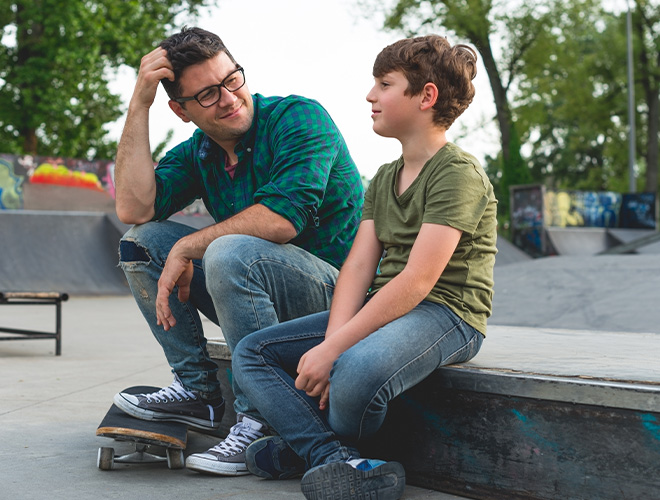
If your teenager seems overwhelmed by worry, avoids situations they used to handle, or shuts down before school each morning, you’re probably asking yourself a version of the same question most parents in your position ask: What can I actually do to help?
The answer starts with understanding what anxiety looks like in adolescents. It often doesn’t look the way adults expect. Then parents need a toolkit of responses that support their teen without accidentally reinforcing the anxiety cycle.
This guide walks through what the research says works, what to avoid, and how to recognize when professional support is the right next step.
Understanding Teen Anxiety – More Than Just Worry
Anxiety is the most common mental health condition among adolescents. According to the National Institute of Mental Health, nearly one in three teens will experience an anxiety disorder before age 18. But many parents miss the signs because teen anxiety often shows up as irritability, physical complaints, or avoidance rather than the hand-wringing worry adults associate with the word.
Your teen might complain of stomachaches before school, refuse to attend social events, spend hours seeking reassurance about unlikely scenarios, or become explosively angry when routines change. These are all common expressions of anxiety in adolescents.
Understanding the biology behind it helps. The adolescent brain is still developing its prefrontal cortex—the region responsible for rational decision-making and emotional regulation—while the amygdala, the brain’s alarm system, is already fully active. This mismatch means teens genuinely feel threats more intensely than adults do, even when their rational brains know the situation is manageable.

What to Say (and What Not to Say)
Phrases That Help
The goal isn’t to eliminate your teen’s anxiety on the spot. It’s to validate what they’re feeling while expressing confidence that they can get through it. Some examples:
- “I can see this feels really overwhelming right now.” Naming the emotion without judgment shows you’re paying attention.
- “What would make this feel even a little more manageable?” This shifts the focus from fear to problem-solving, which engages the prefrontal cortex.
- “You’ve handled hard things before. I believe you can handle this, too.” Gentle reminders of past resilience build self-efficacy.
Phrases to Avoid
- “Just calm down,” or “Stop worrying.” If they could, they would. These phrases signal that you don’t understand what they’re experiencing.
- “There’s nothing to be afraid of.” This dismisses their experience. To your teen, the threat feels very real.
- “When I was your age…” Comparisons tend to shut conversations down rather than open them up.
If you’re looking for a deeper framework on communication techniques, our guide on how to talk to your teen about mental health covers this in more detail.
Five Daily Strategies That Actually Help
1. Maintain Predictable Routines
Anxiety thrives on uncertainty. Consistent wake times, mealtimes, homework windows, and bedtimes create a sense of safety. This doesn’t mean rigid scheduling—it means giving your teen a stable framework they can rely on, especially during stressful periods like exams or transitions.
2. Encourage Gradual Exposure, Not Avoidance
When your teen avoids a feared situation—skipping a party, refusing to present in class, staying home from school—the anxiety temporarily drops. But avoidance teaches the brain that the threat was real, which makes the anxiety stronger next time.
Instead, work together on small, manageable steps toward facing the fear. If your teen dreads school, that might mean driving to the parking lot without going in, then attending one class, then building from there. Progress doesn’t have to be linear.
3. Model Healthy Coping
Teens learn more from what they see you do than what they hear you say. If you narrate your own coping out loud—“I’m feeling stressed about this deadline, so I’m going to take a walk before I sit down to work on it”—you normalize the experience of anxiety and demonstrate that it’s manageable.
4. Limit Reassurance-Seeking
It’s natural to want to comfort your child by answering the same anxious question repeatedly: “Yes, you’ll be fine. Yes, I promise nothing bad will happen.” But excessive reassurance becomes its own compulsion. A better approach is to acknowledge the worry once, then redirect: “We’ve talked about this, and I know you can handle it. What’s your plan?”
5. Protect Sleep
Sleep deprivation amplifies anxiety significantly. The American Academy of Sleep Medicine recommends 8–10 hours per night for teens aged 13–18. If your teen is scrolling late at night, establishing a phone-free wind-down period starting 60 minutes before bed can make a measurable difference.
When Anxiety Needs More Than Home Strategies
The strategies above are a strong starting point. But anxiety sometimes reaches a level where parenting strategies alone aren’t enough. It may be time to seek professional help if your teen’s anxiety is:
- Causing them to miss school regularly or refuse to attend
- Interfering with friendships or family relationships
- Leading to panic attacks, persistent physical symptoms, or sleep disruption
- Getting worse over time despite your best efforts
- Accompanied by depression, self-harm, or substance use
If you’re seeing these patterns, evidence-based treatments like Dialectical Behavior Therapy (DBT) and Cognitive Behavioral Therapy (CBT) have strong research support for adolescent anxiety. These approaches teach teens concrete skills—distress tolerance, cognitive restructuring, exposure techniques—that they carry with them long after treatment ends.
Structured programs such as a Partial Hospitalization Program (PHP) or Intensive Outpatient Program (IOP) can provide the level of support needed when weekly therapy isn’t enough. These programs allow teens to receive several hours of therapeutic programming each day while still sleeping at home and, in many cases, continuing school.
How to Bring Up the Idea of Treatment
Many parents struggle with how to suggest professional help without making their teen feel like something is “wrong” with them. A few approaches that tend to work:
Frame it as a skill-building opportunity, not a fix. “There are people who specialize in helping teens develop tools for managing anxiety. I think it could give you an edge.”
Normalize it. “A lot of people your age work with a therapist. It’s no different from seeing a coach to improve at a sport.”
Give them agency. “I’d like us to at least check it out together. If it’s not the right fit, we’ll figure out something else.”
If your teen is resistant to the idea of therapy entirely, our post on what to do when your teen refuses therapy offers more detailed guidance on navigating that conversation.
Supporting Your Teen Without Losing Yourself
Parenting an anxious teen is emotionally demanding. It’s common for parents to absorb their child’s stress, adjust their own lives around the anxiety, and gradually lose sight of their own needs. This isn’t sustainable, and it doesn’t serve your teen either.
Setting boundaries around your own wellbeing—maintaining your social connections, protecting your sleep, seeking your own support when needed—models exactly the kind of healthy coping you want your teen to develop. Taking care of yourself isn’t selfish. It’s part of the strategy.
When You’re Ready for the Next Step
If your teen is struggling with anxiety and you’re not sure whether they need professional support, we can help you figure that out. HavenRise Academy offers teen anxiety treatment through structured outpatient programs designed specifically for adolescents in grades 6–12.
Take our “Is My Teen a Good Fit?” assessment to see whether HavenRise is the right level of support, or contact us directly to speak with our admissions team. We’re here to help you help your teen.