
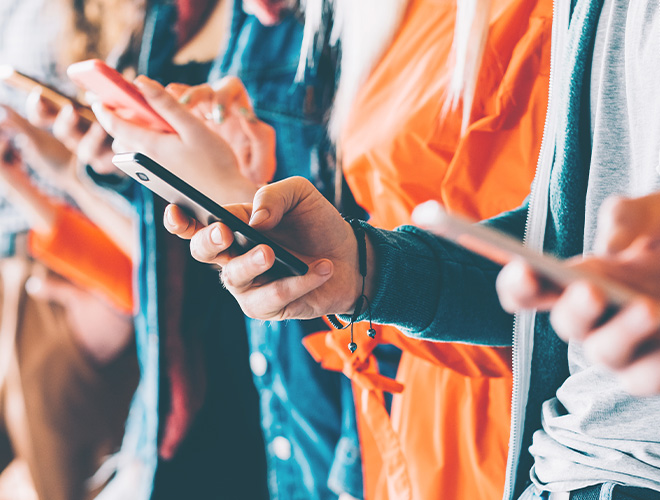
You already know social media is a problem. You’ve read the headlines, heard other parents talk about it, and probably had more than a few arguments with your teenager about screen time. What you may not know is where the line falls between normal teen behavior and something that warrants clinical attention—or what you can realistically do about it beyond taking away the phone.
The research on social media and teen mental health has moved well beyond speculation. National data, the U.S. Surgeon General’s advisory, and clinical experience all point in the same direction: the relationship between heavy social media use and teen anxiety, depression, and emotional dysregulation is real. But the solution isn’t as simple as a ban.
Here’s what the evidence actually says and what you can do with it.
What the Research Actually Says About Social Media and Teen Mental Health
In 2023, U.S. Surgeon General Vivek Murthy issued a formal advisory on social media and youth mental health—a move typically reserved for urgent public health threats like tobacco and opioids. The advisory concluded that we cannot consider social media sufficiently safe for children and adolescents, citing evidence that frequent use is associated with changes in the developing brain, particularly in areas that govern impulse control, emotional regulation, and sensitivity to social reward and punishment.
The numbers behind the advisory are striking. According to a 2023 Gallup survey, U.S. teenagers spend an average of 4.8 hours per day on social media, with 51% spending at least four hours daily. Girls average 5.3 hours compared to 4.4 for boys, and usage peaks at 5.8 hours per day among 17-year-olds. A Pew Research Center survey found that nearly half of teens describe themselves as online “almost constantly.”
A 2019 study published in JAMA Psychiatry found that adolescents who spend more than three hours per day on social media face roughly double the risk of poor mental health outcomes, including depression and anxiety. That three-hour threshold matters because the average teen is already well past it. In June 2024, the Surgeon General took the additional step of calling for a congressionally mandated warning label on social media platforms—the same type of label that appears on cigarettes and alcohol.
None of this means that every teenager on TikTok or Instagram is headed for a clinical diagnosis. Social media can also help teens maintain friendships, find community, and access information. But the research is clear that for a meaningful subset of adolescents—particularly those already vulnerable to anxiety, depression, or low self-esteem—heavy, unstructured social media use is making things worse.
Warning Signs That Social Media Is Affecting Your Teen’s Mental Health
Not every teen who uses social media heavily will develop mental health problems. The question isn’t whether your teen uses these platforms—it’s whether the use is interfering with their functioning. Watch for these patterns:
- Mood shifts tied to phone use: Your teen seems noticeably more anxious, irritable, or withdrawn after scrolling. They check their phone compulsively or become distressed when they can’t access it.
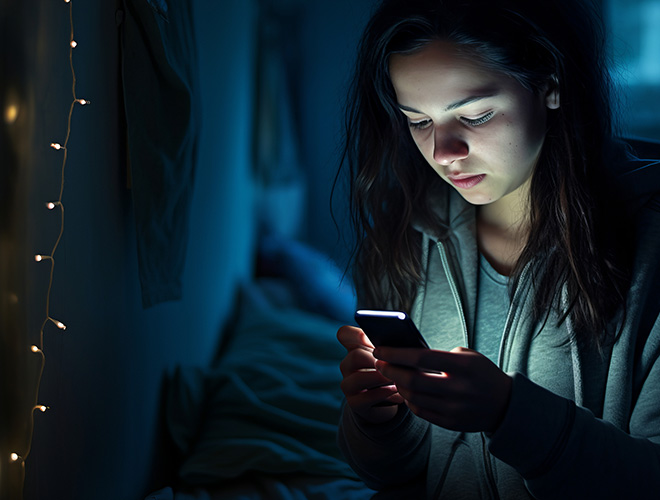
- Sleep disruption: They’re staying up late on their phone and struggling to wake up for school. The Surgeon General’s advisory specifically flags disrupted sleep as one of the primary pathways through which social media harms teen mental health.
- Social comparison and body image concerns: Your teen makes frequent negative comments about their appearance, weight, or social standing relative to peers or influencers they follow. Research shows this is particularly pronounced among teen girls on image-focused platforms.
- Withdrawal from in-person activities: They’re declining invitations, dropping extracurriculars, or preferring to stay home and scroll rather than engage with friends and family face-to-face.
- Emotional escalation around access: Conversations about screen time consistently lead to intense emotional reactions—rage, crying, or panic—that feel disproportionate to the situation.
- Decline in academic performance: Grades are slipping, assignments are being missed, and teachers are reporting attention and engagement problems that weren’t present before.
Any one of these in isolation may be typical adolescent behavior. When several appear together or intensify over time, it’s worth paying closer attention.
Why Simply Banning the Phone Doesn’t Work
The instinct to confiscate the phone or shut off Wi-Fi is understandable. But research and clinical experience consistently show that blanket bans tend to backfire with adolescents, for several reasons.
First, social media is deeply embedded in how teens maintain friendships and navigate their social world. Removing access entirely can increase feelings of isolation and social exclusion—the very outcomes you’re trying to prevent. A 2025 Brookings Institution analysis noted that bans deprive teens of opportunities to develop digital literacy skills and delay essential conversations about online risks rather than facilitating them.
Second, adolescence is defined by the developmental drive toward autonomy. A unilateral ban often escalates conflict and drives use underground—teens find workarounds, borrow friends’ devices, or create secondary accounts. The damage to relationships caused by the power struggle can be more harmful than the social media use itself.
Third, the problem isn’t usually the platform in isolation. It’s the intersection of the platform with a teen’s existing vulnerabilities, the type of content they’re consuming, and the degree to which it’s displacing sleep, physical activity, and face-to-face connection. A more effective approach targets those underlying dynamics rather than the device alone.
5 Strategies That Actually Help
Have the conversation before you set the rules
Instead of announcing restrictions, start with curiosity. Ask your teen what they like about the platforms they use, what stresses them out, and what they’d change if they could. This isn’t about being permissive—it’s about gathering information and making your teen feel heard before you collaborate on boundaries. In DBT terms, this is validation before problem-solving, and it dramatically increases the odds that your teen will actually follow through.
Establish tech-free zones and times together
Rather than imposing a total ban, negotiate specific boundaries: no phones during meals, no screens in bedrooms after 10 p.m., or a one-hour wind-down before sleep. Frame these as household norms that apply to everyone—including you. When teens see parents modeling the same boundaries, compliance increases and resentment decreases.
Teach your teen to notice the connection between scrolling and mood
One of the most powerful skills from evidence-based therapies like CBT and DBT is self-monitoring—learning to observe your own emotional patterns without judgment. Encourage your teen to check in with themselves after a scrolling session: “Do I feel better or worse than when I started?” Over time, this builds internal awareness that no parental control app can replicate.
Protect sleep above all else
If you make one change, make it this one. Sleep disruption is the single most well-documented pathway through which social media damages adolescent mental health. The developing teen brain requires 8–10 hours of sleep, and exposure to blue light and the emotional stimulation of social feeds directly undermines both sleep quality and duration.
A charging station outside the bedroom, used by the whole family, is one of the highest-impact, lowest-conflict interventions available.
Strengthen the offline life
Social media becomes most damaging when it’s the primary source of a teen’s social connection and self-worth. The most protective factor isn’t less screen time—it’s more real-world engagement.
Help your teen stay connected to activities that build competence and belonging: sports, creative pursuits, volunteering, part-time work, faith communities, or simply regular time with friends in person. When the offline life is rich, the pull of the feed becomes less powerful.
When Social Media Use Points to Something Deeper
For some teens, problematic social media use isn’t the root problem—it’s a symptom of an underlying mental health condition that needs professional treatment. Social media can serve as a coping mechanism for anxiety, a way to avoid painful real-world interactions, or a compulsive behavior driven by the same brain pathways involved in other forms of addiction.
Consider seeking professional support if:
- Your teen’s anxiety or depression has persisted for more than two weeks and is interfering with school, friendships, or family life.
- You’ve tried setting boundaries together, and the emotional reactions are consistently extreme—not just frustration, but panic, rage, or hopelessness.
- Your teen has expressed thoughts of self-harm or suicide in any context.
- Social media use is connected to disordered eating behaviors, self-harm, or substance use.
- Your teen is unable to reduce their use even when they recognize it’s making them feel worse.
These situations often benefit from the structure and clinical intensity of a program that goes beyond weekly therapy. HavenRise Academy’s adolescent treatment programs use evidence-based approaches, including CBT and DBT—the same therapeutic frameworks behind the strategies described above—delivered in a structured setting that helps teens build coping skills, strengthen emotional regulation, and rebuild healthy patterns.
Our PHP and IOP programs allow teens to receive intensive treatment while continuing to live at home and, in many cases, stay connected to school.
If you’re not sure whether what you’re seeing warrants professional help, that uncertainty itself is a reason to call. HavenRise Academy of Jacksonville offers free, confidential assessments to help families understand their options. Reach us at (904) 659-7473.