
Orange Park is its own kind of community. A suburban Clay County town shaped by the river, by US-17, and by its proximity to NAS Jacksonville, which means a meaningful share of the families here are connected to the military — active duty, retired, or somewhere along the way.
That can layer real complexity onto raising a teenager, between deployments, school changes after PCS moves, and the quieter weight of carrying it all as a family. If your son or daughter is struggling, the work of getting them help should not add to that load. HavenRise Academy is about thirty minutes east, across the Buckman Bridge, in Jacksonville’s Deerwood Park.
We are an outpatient mental health program built specifically for adolescents in grades 6 through 12, and that focus shapes how we assess, treat, and run our groups. Because care is outpatient, your teen stays at home, stays in school, and stays connected to the friends and routines that hold them. There are no overnight stays and no sending your child away, just specialized, evidence-based care close enough to fit into your week.
Outpatient care close to home
Families come to us from across Orange Park, from the US-17 corridor and Wells Road out toward Doctors Lake and the neighborhoods near NAS Jacksonville. The drive east across the Buckman Bridge to Deerwood Park runs roughly 25 to 35 minutes, depending on the time of day, and we will be honest with you about timing. We will help you build a schedule that fits around school, work, and the realities of bridge traffic across the seasons.
Our programs for Orange Park teens
We offer a full continuum of outpatient care, so the level of support can match what your teen actually needs and step down as they make progress.
Our Partial Hospitalization Program (PHP) is our most structured option, a full day from 9 a.m. to 4 p.m. for teens who need consistent daily structure to stabilize and find their footing. Because that is a full day out of the classroom, we provide academic support on site so your teen does not fall behind while they focus on treatment.
Our Intensive Outpatient Program (IOP) meets several mornings a week in a focused block that combines group and individual work. The morning timing leaves room for school, family, and the activities that matter to your teen through the rest of the day. Groups move from connection and goal setting into emotional awareness and then practical skills such as stress management and communication.
Our Outpatient Program (OP) offers weekly therapy and counseling, a fit for teens starting with lighter support or stepping down from PHP or IOP to hold onto what they have built. Many teens move between these levels over time, and we help you choose the right one at each stage.
Our approach to treating teens
No single therapy works for every teen, and we do not try to make one fit. We start by understanding your son or daughter and the picture they are presenting, then draw on several evidence based methods, often layered together, to meet them where they actually are.
Dialectical Behavior Therapy
Dialectical Behavior Therapy is one of the methods we rely on most, and it carries some of the most robust research support for teens whose emotions run hard. DBT is built around four real-world skill sets your teen can use the same week they learn them — riding out hard moments without escalating them, cooling intense feelings instead of acting on them, showing up better in their relationships, and noticing what is in front of them when their head is somewhere else. For a teenager who feels at the mercy of their feelings, those skills change who is in charge.
Cognitive Behavioral Therapy
A great deal of what hurts a teen lives inside their own thoughts, in convictions like “I am alone in this,” “I cannot get it right,” or “no one understands what it is like to be me.” CBT teaches them to notice those thoughts as thoughts, weigh them against what is actually happening, and replace them with something fairer and steadier. Alongside DBT, it gives a teen both a clearer view of what they are feeling and the tools to respond differently.
Trauma-informed care
If trauma is part of what your teen is carrying, especially the layered kinds that can come with military family life or repeated transitions, we move at their pace rather than ours. Pressing for the story before they are ready can deepen the wound rather than relieve it. Our entire team works inside a trauma informed framework grounded in safety, trust, and your teen’s sense of control. When indicated, we use Trauma-Focused CBT, the leading evidence based protocol for adolescent trauma, paired with somatic work that helps a teen come back into their body and ease what they have been holding.
Therapy alongside peers, not in isolation
A lot of Orange Park teens have already learned to look fine when they are not, especially in households where parents are deployed, retired in, or otherwise managing a lot at once. One of the most powerful moments in treatment is when a teen realizes they are not alone in what they are going through.
Our groups are age-specific (grades 6 through 12) and adult-free, so teens can drop the fine-looking version of themselves, practice new skills in real time, and hear their own experiences reflected back by peers who understand them. For many families, this turns out to be the part of the program their teen values most.
Family healing alongside your teen
A teen does not get well in isolation, which is why parents are part of the work from day one. We are not looking for who to blame. We are looking to ease the tension at home and rebuild the trust between you and your child. Often, what reads as defiance is really a skill your son or daughter has not had the chance to develop, and when the whole household carries the same language, the calmer version of your teen has somewhere to land at home.
What treatment looks like day to day
Most families want a clear sense of what care actually looks like day-to-day. It opens with a conversation and an assessment to help us understand your teen and recommend the right level of care. A program day then combines group work, individual therapy, and hands-on practice with the new skills, with PHP covering the school day and IOP scheduled in the morning.
You stay involved throughout, meeting with the care team to track progress and plan the step-down to lower-acuity care as your teen finds steadier ground. Our typical day page details the rhythm more fully.
What we help Orange Park teens work through
Families reach out when a teen is carrying more than they can manage on their own. We support teens through anxiety, depression, self harm, trauma and PTSD, emotional and behavioral dysregulation, and school refusal. Whether your daughter is no longer the kid you knew or your son has put up walls you cannot get behind, there is a way through, and we will help you find it.
Signs it may be time to reach out
In a household holding a lot at once, it is easy to read a teen’s struggle as background noise or as the cost of a hard season. Sometimes that is what it is. It may be time for more structured support when the changes stop feeling temporary, including grades sliding, a pulling away from friends and once loved activities, escalating anger or shutdowns at home, missed school or refusal to go, or anything pointing to self-harm.
It is also worth a call if weekly therapy alone no longer seems to be enough, or if a recent move or deployment has hit your teen harder than it looks. Our is my teen a good fit guide can help, and so can a short conversation with our team.
Why Orange Park families choose HavenRise
Orange Park parents who walk through our doors tend to value a few things. The first is that we focus on adolescents only, which means everything from how we run groups to how we talk to a teen is calibrated to actually work with this age.
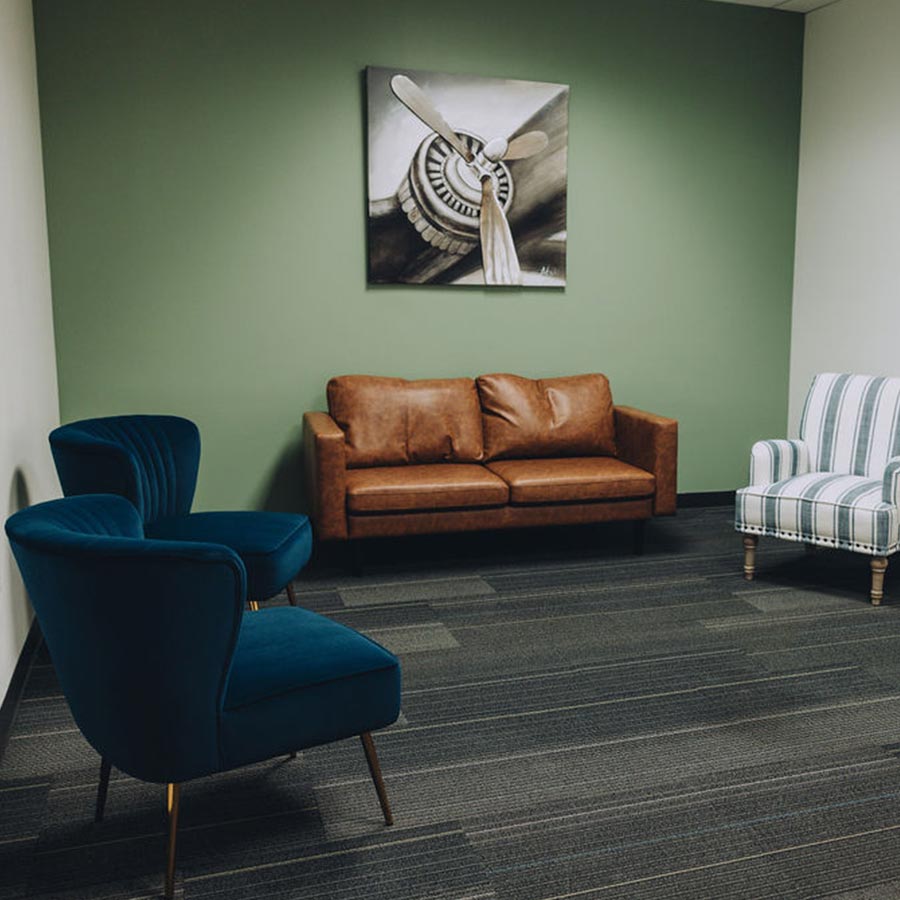
The second is our blended and evidence-based clinical approach. The third is our honesty about logistics — the bridge drive is real, and we will help you plan around it. Families also value the discretion we bring to every part of care, and the calm of our Deerwood Park space, which feels nothing like a hospital.
Working with Orange Park schools
Stepping back from a regular school day raises real questions, especially for families across the Clay County District Schools and the wider Clay County system, including Orange Park High School, Ridgeview High School, Lakeside Junior High, Lakeside High School, and Oakleaf High School at the border.
Our team coordinates excused absences and works with school counselors to keep your teen’s education on track, with academic and school support built into our PHP day, so the return to a full class schedule is as smooth as possible. The point is for your teen to return to the classroom stronger, not behind.
Insurance and getting started
We work with families to make care accessible and will walk you through coverage and options up front, so cost is one less unknown during an already stressful time. The details are on our insurance and financing page. When you are ready, reaching out is simple, and there is no pressure, just a conversation about your teen and what they need.
Questions Orange Park parents ask
How far is HavenRise from Orange Park?
About 25 to 35 minutes east, across the Buckman Bridge on I-295 and over to our Deerwood Park location. We will be honest with you about how the time changes at rush hour and help you plan around it.
What happens if we receive PCS orders during treatment?
We work with military families on this regularly. As soon as you have orders, we coordinate a smooth transition, support you in finding continuing care at your new duty station, and provide whatever clinical handoff is appropriate so your teen does not lose ground.
Do you take TRICARE?
Coverage details can change, so the best step is a quick call so we can verify your specific plan and explain how it applies. We are accustomed to working with military families and the realities of how their coverage works.
How do you coordinate with Clay County District Schools?
We work directly with school counselors at Clay County schools to handle excused absences and support continuity of learning while your teen is in care, sharing what is appropriate about the care plan within your family’s privacy preferences.
Will my teen fall behind in school?
Academic support sits inside the PHP day, and we coordinate excused absences with the school so your teen does not lose ground on coursework while they focus on treatment.
What is the difference between PHP, IOP, and OP?
PHP runs the full school day, 9 a.m. to 4 p.m., for teens needing the heaviest structure. IOP holds to a handful of mornings each week, leaving the afternoon for school and home. OP is weekly therapy and counseling. Many teens move down through these levels as their footing returns.
Do you only use DBT?
No. DBT is at the core of our work, and we combine it with CBT, trauma-focused care, family therapy, and adolescent group work — whichever mix fits your teen.
Are the groups only for teens?
Yes. Our groups are strictly adolescent, grades 6 through 12 only and no adults, which helps teens lower their guard and practice with peers who understand.
Do you take our insurance?
We are in network with many plans and will run your coverage and lay out your options up front, with no obligation on your end. Begin on our insurance and financing page or call us directly.
How soon can we get started?
Usually fast. The first step is a phone conversation, and we set the pace to fit your family.
Take the first step for your teen
If your son or daughter is struggling, you do not have to figure this out alone, and you are not the first Orange Park family to make the call. Phone us at 904-659-7473 or reach out through our contact page, and we will help you understand the right level of care and the next step. Support for your Orange Park teen is closer than it sounds.