San Marco sits at a particular intersection of Jacksonville, historic, walkable, and quietly demanding. Many of the families who live here are physicians, attorneys, university faculty, and other professionals who hold themselves to high standards and apply those same standards to the care their children receive.
When a teen in this kind of household begins to slip, parents often arrive at our door having already done a great deal of research. We welcome that and the questions. HavenRise Academy is roughly fifteen minutes south on I-95, in Jacksonville’s Deerwood Park.
We are an outpatient mental health program built specifically for adolescents in grades 6 through 12, and that singular focus is part of what makes the work effective. Because care is outpatient, your son or daughter stays at home, stays in school, and stays connected to the relationships and routines that already support them. There are no overnight stays, just specialized, evidence-based care close enough that it fits inside the life you have built in San Marco.
Outpatient care close to home
Families come to us from across San Marco, from the Square down Hendricks Avenue toward Atlantic Boulevard and the river. The drive south on I-95 to Deerwood Park is short enough that even a full PHP day remains workable within a weekday rhythm, and we will help you build a schedule that fits around the demands of your household and work.
Our programs for San Marco teens
We offer a full continuum of outpatient care, which allows us to match the level of support to your teen’s clinical needs and adjust as they make progress.
Our Partial Hospitalization Program (PHP) is the most intensive option, a full day from 9 a.m. to 4 p.m. for teens who need consistent daily structure to stabilize.
Because that is a full day away from the classroom, we provide academic support on-site so your teen does not fall behind in coursework while they focus on treatment.
Our Intensive Outpatient Program (IOP) meets several mornings a week in a focused block that combines group and individual work. The morning schedule is intentional. It allows your teen to receive substantive treatment while leaving the rest of the day available for school, family, and the activities that matter to them.
Groups move from connection and goal-setting to emotional awareness, then to practical skills such as stress management and communication.
Our Outpatient Program (OP) offers weekly therapy and counseling, a good fit for teens entering with lighter support needs or stepping down from PHP or IOP to consolidate their gains. Many teens move between these levels over time, and we help you choose the right one at each stage.
Our approach to treating teens
There is no single therapy that suits every teen, so we do not insist on one. We begin by understanding your child, then draw on several evidence-based approaches, often in combination, to meet them where they are.
Dialectical Behavior Therapy
Dialectical Behavior Therapy is central to our work, and it has one of the strongest research bases of any approach for teens whose emotions overwhelm them. DBT is built around four practical skill sets — weathering distress without making it worse, bringing intense emotions down, managing the relationships that matter to them, and staying anchored in the present.
For a teenager whose feelings have started to drive their behavior, those skills hand control back, and the change often shows up at home, not just in session.
Cognitive Behavioral Therapy
Much of an adolescent’s suffering is shaped by their own internal narratives, in convictions like “I cannot handle this,” “I am letting everyone down,” or “this will not change.” Cognitive Behavioral Therapy gives teens the tools to identify those patterns, test them against actual evidence, and replace them with thinking that is both more accurate and more compassionate.
Used alongside DBT, CBT pairs the cognitive work with the practical regulation skills that allow change to take hold.
Trauma-informed care
When trauma factors into your teen’s clinical picture, we hold the work to a trauma informed standard that places safety, trust, and your teen’s agency above process. We do not press a teen to recount what they have lived through before they are ready, since that pressure can compound rather than relieve trauma symptoms.
For teens who are ready and indicated, we use Trauma-Focused CBT, recognized as the leading evidence based protocol for adolescent trauma, complemented by somatic work that helps a teen reconnect with their body and release held tension.
Therapy alongside peers, not in isolation
San Marco’s social world is closer than it looks. Teens at Bolles, Bishop Kenny, and Episcopal often know each other and circle back through the same friend groups at the river, and many adolescents in that environment become skilled at presenting well while suffering quietly. One of the more powerful moments in treatment is when a teen recognizes they are not alone in what they are carrying. Our groups are age specific, grades 6 through 12 and adult free, so teens can drop the polish, practice new skills in real time, and hear their own experience reflected back by peers who genuinely understand. For many families, this turns out to be the part of treatment their teen ends up valuing most.
Family healing alongside your teen
Adolescent recovery is rarely a solo project, and family involvement is therefore built into the work from the first session. The intent is not to assign blame. It is to reduce conflict at home and rebuild the relationship between you and your teen. What can read as defiance is frequently a regulatory skill the teen has not yet acquired, and when parents are coached on the same language and tools their teen is learning, the regulation they build with us has a place to consolidate at home.
What treatment looks like day to day
Most parents want a clear sense of the clinical process, and we are happy to lay it out. Care begins with a structured intake assessment that informs our recommended level of care. From there, each program day combines group therapy, individual sessions, and skills practice, with PHP filling the school day and IOP scheduled in the morning.
Family work runs in parallel, since you meet with the care team regularly to review your teen’s progress and plan the step-down to lower-acuity care as they stabilize. Our typical day page details the routine more fully.
What we help San Marco teens work through
Parents reach out when a teen is carrying more than they can manage on their own. We support teens through anxiety, depression, self harm, trauma and PTSD, emotional and behavioral dysregulation, and school refusal. Whether your daughter is increasingly withdrawn and unreachable, or your son is volatile in ways that no longer feel familiar, there is a treatment path that fits, and we will help you find it.
Signs it may be time to reach out
In high-achieving households, it is easy to read a teen’s decline as the cost of doing well — a hard semester, AP overload, activities stacking up. Sometimes that is what it is.
It may be time to consider more structured support when the changes persist beyond a temporary stretch, including grades sliding, withdrawal from friends and once loved activities, escalating anger or shutdowns at home, missed school or refusal to go, or anything indicating self-harm. It is especially worth a call if weekly therapy is no longer enough. Our is my teen a good fit guide can help you sort through it, and so can a brief conversation with our team.
Why San Marco families choose HavenRise
San Marco parents tend to do real diligence before trusting their teen’s care to anyone, and we welcome the questions that come with that. Families choose us for our exclusive focus on adolescents, our evidence based clinical approach, and a credentialed team that can speak clearly about how care works and what progress looks like.
The short drive south on I-95 keeps consistent attendance realistic, and our quiet space in Deerwood Park is intentionally unlike a hospital. Families also value the discretion with which we handle every part of care, from clinical notes to billing.
Working with San Marco schools
Stepping away from the classroom raises legitimate questions, particularly for families whose teens attend Bishop Kenny High School, The Bolles School at the San Jose Campus, or Episcopal School of Jacksonville across the river, alongside families in the public Hendricks Avenue and Landon Middle pipeline.
Our team coordinates excused absences and works with school counselors to keep your teen’s education on track, with academic and school support built into our PHP day so the return to a full class schedule is as smooth as possible. The goal is always for your teen to come back steadier, not behind.
Insurance and getting started
We work with families to make care accessible and will walk you through coverage and options up front, so cost is one less unknown during an already stressful time. The details are on our insurance and financing page. When you are ready, reaching out is simple, and there is no pressure, just a conversation about your teen and what they need.
Questions San Marco parents ask
How far is HavenRise from San Marco?
About fifteen to twenty minutes from most San Marco addresses, a straight run south on I-95 to our Deerwood Park location.
How do you coordinate with Bolles, Bishop Kenny, and Episcopal?
We work directly with school counselors to handle excused absences and support continuity of learning, and we share what is appropriate about your teen’s care plan within your family’s privacy preferences.
Can my teen stay enrolled in their private school during PHP?
Yes. Your teen remains enrolled at Bolles, Bishop Kenny, Episcopal, or wherever they attend, and we support continuity so the return to a full schedule is smooth.
Can billing and insurance be handled discreetly?
Yes. We handle every family’s billing and insurance information with strict confidentiality, and we are accustomed to working with families who place a high value on privacy in how care is administered.
What is the experience like when we arrive?
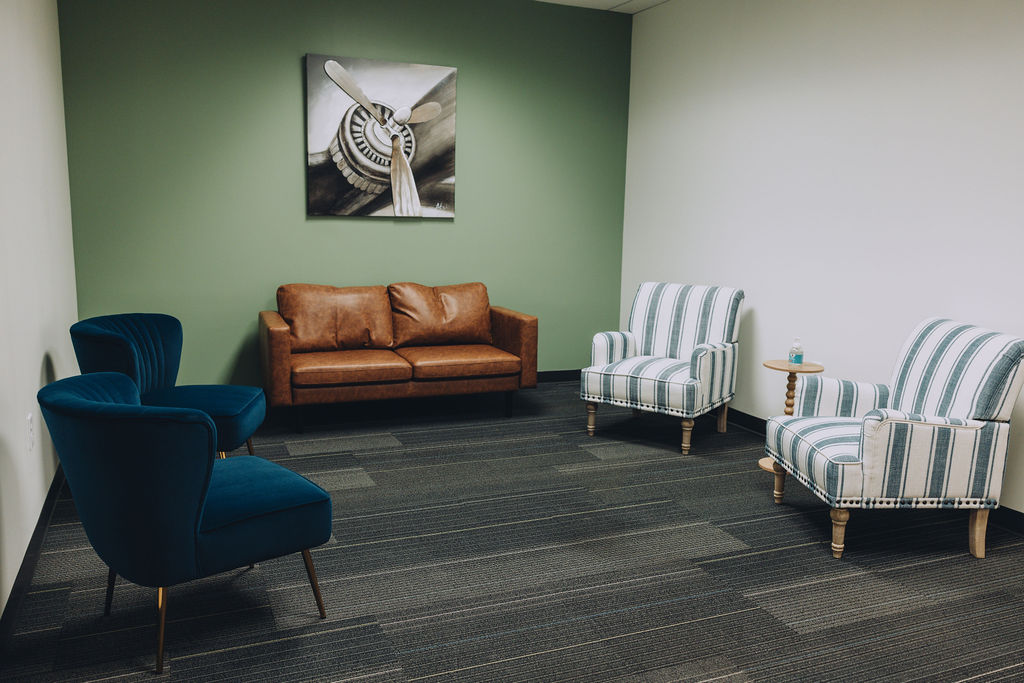
Our Deerwood Park space is calm and intentionally not clinical feeling, with on-site parking and a private reception area. You will not be filling out paperwork in a public waiting room. If you would like to come see the space before deciding, we are happy to arrange that.
What is the difference between PHP, IOP, and OP?
PHP is the most intensive option, running 9 a.m. to 4 p.m. for teens who need the most structure. IOP meets several mornings per week and leaves the rest of the day for school and home life. OP is weekly therapy and counseling. Many teens progress through these levels as they stabilize.
Do you only use DBT?
No. DBT is core to our work, but we combine it with CBT, trauma-focused care, family therapy, and adolescent peer groups, calibrated to each teen’s clinical needs.
Are the groups only for teens?
Yes. Therapy groups are age specific, limited to grades 6 through 12 with no adults present, which supports openness and skills practice with peers who genuinely understand.
Will my teen fall behind in school?
Academic support is built into the PHP day, and we coordinate excused absences with your teen’s school, so coursework continuity is preserved while they focus on treatment.
Do you take our insurance?
We accept many plans and will verify your coverage and walk you through your options up front, with no commitment expected before you have what you need. Begin on our insurance and financing page or call us directly.
How soon can we get started?
Often quickly. The first step is a conversation, and we calibrate the pace to what works for your family.
Take the first step for your teen
If your son or daughter is struggling, the work ahead is real, and you do not have to start it alone. Call us at 904-659-7473 or reach out through our contact page, and we will help you understand the right level of care and the next step. Support for your San Marco teen is closer than you think.