
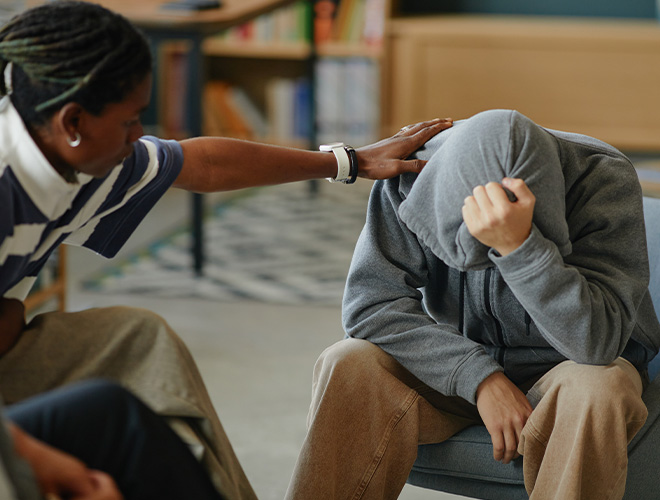
Maybe you know exactly what happened. A car accident, the loss of someone they loved, something they saw or experienced that no teenager should have to carry. Or maybe you only know that something changed, and the teen in front of you, more guarded, more jumpy, more distant, does not quite match the one you knew a few months ago.
Parents in both situations tend to ask the same questions. Is this a normal reaction? Will it fade on its own? How do I help without making it worse? This guide walks through what PTSD in teens actually looks like, the quieter signs of trauma in teens that are easy to miss, and how to tell the difference between a hard season and a teen who is stuck and needs support.
What counts as trauma for a teenager
When parents hear the word trauma, they often picture catastrophic events, and those certainly qualify. Accidents, abuse, violence, natural disasters, and the sudden loss of a family member or friend can all overwhelm a teenager’s ability to cope. But trauma is defined less by the event itself and more by what the event does to the person experiencing it.
Witnessing something frightening happen to someone else counts. So can a frightening medical experience, a house fire, a betrayal by someone trusted, or relentless bullying. Ongoing stress, like growing up around conflict or instability, can shape a nervous system just as powerfully as a single terrible day.
Two teens can live through the same event and walk away affected very differently, and that is not a matter of toughness or character. Age, temperament, prior experiences, and how much support surrounded the teen at the time all influence how an event lands. If your teen is struggling with something that seems, from the outside, like it should have been manageable, the struggle is still real, and it deserves the same care.
Trauma and PTSD are not the same thing
Here is something hopeful that often gets lost. Most teens who experience something traumatic do not go on to develop PTSD. Trouble sleeping, wanting to stay close to home, tearfulness, irritability, and replaying the event mentally are all common in the first days and weeks after something frightening, and they are usually signs of a mind actively processing what happened, not signs of disorder. With safety, routine, and supportive adults, most of these reactions ease on their own.
PTSD describes what happens when that natural recovery process gets stuck. Instead of fading, the reactions persist for more than a month, or they intensify, and they start interfering with school, friendships, sleep, and family life. Sometimes symptoms appear right away.
Sometimes they surface months later, after the immediate crisis has passed and everyone assumed the hard part was over. The timing matters less than the pattern. A teen who is stuck does not usually get unstuck by waiting longer.
How PTSD shows up in teens
Clinicians look for four broad groups of symptoms. The first is re-experiencing, where the event keeps intruding through nightmares, unwanted memories, or sudden waves of distress when something acts as a reminder. The second is avoidance, where a teen steers around anything connected to what happened, including places, people, conversations, and sometimes entire topics of feeling. The third involves shifts in mood and belief.
Teens may carry shame or self-blame that does not belong to them, describe feeling numb or detached, lose interest in things they used to love, or quietly conclude that the world is unsafe and people cannot be trusted. The fourth is a nervous system on constant alert, which shows up as trouble sleeping, poor concentration, startling easily, and irritability that seems to come from nowhere.
In teenagers specifically, these symptoms often wear disguises. Where an adult might describe fear or flashbacks, a teen may simply seem angry, defiant, or reckless. Grades slide because a brain scanning for danger has little bandwidth left for algebra.
Headaches and stomachaches multiply. Risk-taking can increase, which surprises parents, but for some teens recklessness is a way of feeling something through the numbness or of taking back a sense of control. If you find yourself thinking that your teen’s behavior problem appeared out of nowhere a few months after a hard event, it is worth asking whether the behavior is the problem or the signal.
The hidden trauma responses parents often miss
Most parents know about fight or flight. Fewer know about freeze and fawn, and those quieter responses are the ones that slip past everyone, including teachers and sometimes clinicians. A teen in a freeze response may seem checked out, foggy, or unmotivated, doing less and feeling less rather than acting out.
A teen in a fawn response copes by pleasing everyone, reading every room, and never causing a moment of trouble, because somewhere along the way their nervous system learned that keeping others happy is how you stay safe.
Dissociation deserves its own mention. Teens who dissociate describe zoning out, feeling unreal or far away, or losing stretches of time, and from the outside it can look like daydreaming or not listening. Some teens cope by controlling what they can, throwing themselves into achievement, perfect grades, and packed schedules, and their trauma hides behind a report card everyone praises.
This is why the teen who insists they are fine, and even looks fine, is not always fine. With these presentations, the most reliable signal is change. A teen who was engaged and is now flat, or who was relaxed and is now compulsively perfect, is telling you something in the only language their nervous system currently has.
How trauma tangles with other struggles
Unresolved trauma rarely stays in its own lane. It commonly travels with anxiety and depression, and it can feed patterns that look like separate problems, including substance experimentation, self-harm, and changes in eating.
A teen trying to manage overwhelming feelings may reach for anything that offers relief or control, and food is often within reach, something we wrote about in our guide to eating disorders in teens. None of this means every struggling teen has a trauma history. It means that when trauma is present, treating only the surface behavior tends not to hold, because the engine underneath is still running.
How to support your teen at home
Start with steadiness. Predictable routines, regular meals, consistent sleep, and a calm home base give a dysregulated nervous system something solid to lean on. Let your teen know, plainly and without drama, that you are available and that nothing they tell you will make you love them less.
Then let them set the pace. One of the most common and understandable mistakes parents make is pressing for details, because it feels like talking should help. For a traumatized teen, being pushed to retell the story before they feel safe can deepen the wound. Your job is to keep the door open, not to walk them through it. Our guide on how to talk to your teen about mental health offers language that opens doors gently.
Validate what you see without judging it. Something like, “It makes sense to me that you have been on edge since the accident,” communicates that their reactions are understandable responses to something real, not defects. And watch your own reactions, because teens track them closely. If talking about what happened visibly upsets you, many teens will protect you by going quiet. Getting your own support, so you can be steady in front of them, is not selfish. It is part of the treatment.
When it is time for professional help
Reach out when symptoms have lasted more than a month, when they are intensifying rather than easing, or when avoidance is starting to shrink your teen’s life, pulling them away from school, friends, or activities they used to enjoy.
Reach out sooner if your teen ever talks about self-harm or not wanting to be here, or if you simply feel out of your depth. You do not need to wait for a crisis to justify an assessment, and an assessment does not commit you to anything beyond clarity.
The genuinely good news is that trauma treatment for adolescents works. Approaches like trauma focused cognitive behavioral therapy help teens process what happened at a safe, gradual pace while building real skills for managing the symptoms, and families are included in the work rather than left in the waiting room.
You can read more about how trauma therapy for teens works, or learn about our teen trauma and PTSD treatment in Jacksonville. And if your teen is resistant to the idea, that is common with trauma in particular, since therapy means approaching the very thing their whole system is organized around avoiding. Our post on what to do when your teen refuses therapy can help you navigate that conversation without a standoff.
When to seek help right away
Some moments call for immediate support rather than a scheduled appointment. If your teen expresses thoughts of harming themselves or of not wanting to be alive, treat it as urgent, even if you are not sure they mean it.
You can call or text 988, the Suicide and Crisis Lifeline, at any hour of any day to reach trained support. If your teen is in immediate danger, call 911 or go to the nearest emergency room. Acting quickly in those moments is not overreacting. It is exactly what the moment asks of you.
Common questions from parents
Can a teen develop PTSD from something that seems minor?
Yes. Trauma is measured by its impact on the person, not by how the event ranks from the outside. A teen’s age, temperament, history, and support at the time all shape how an experience lands. If your teen’s reactions look like the symptoms described here, they warrant attention regardless of whether the event seems objectively severe to you.
My teen refuses to talk about what happened. Should I push?
No. Pressing a teen to retell a traumatic experience before they feel ready tends to increase distress rather than relieve it. Keep the door open, stay warm and available, and let them control the pace. If weeks pass and symptoms are not easing, a trauma trained therapist can help your teen approach the memory safely, which is different from a parent asking them to relive it at the kitchen table.
How long after a trauma should symptoms fade?
Strong reactions in the first few weeks are normal and usually ease as safety and routine return. When symptoms persist beyond a month, intensify, or begin disrupting school, sleep, friendships, or family life, that is the point where a professional assessment makes sense. Keep in mind that some teens look fine at first and develop symptoms months later, so a delayed reaction still counts.
Does PTSD in teens go away on its own?
Sometimes symptoms soften with time and support, but PTSD by definition describes reactions that have already persisted and interfered with daily life, and waiting tends to let avoidance patterns dig in deeper. The encouraging flip side is that trauma treatment for adolescents is effective, and teens who get help typically recover faster and more fully than teens who are left to outgrow it.
Healing is the expected outcome, not the exception
Trauma changes how a teen sees the world, but it does not get the final word. With the right support, teens process what happened, reclaim the parts of life that fear took over, and often grow in ways that surprise everyone, including themselves.
If what you have read here sounds like your teen, our is my teen a good fit guide is a helpful next step, or you can simply call us at 904-659-7473 or reach out through our contact page. We will listen to what is going on and help you find the right path forward, together.